Logline
A UCLA professor and death-row activist describes a soul-shifting conversation with incarcerated youth in a gripping performance that uses comedy, culture, and scientific research to improve mental health and disrupt cycles of violence.
Synopsis
A UCLA professor and death row activist, Dr. J, recounts a meeting with twelve youth inside a juvenile detention facility discussing trauma, violence, and the social conditions that shape their lives. They embark on a hilarious, heartbreaking, and inspiring journey to learn techniques for calming intense emotions, avoiding retaliation, and choosing peace. Based on true stories and real events, the film combines narrative comedy, street culture, and evidence-based techniques to teach youth stress management, emotional regulation, and conflict resolution. Presented in an accessible stand-up comedy format, Dr. J describes this heartfelt exchange as the youth courageously engage with mental health tools for the first time in an attempt to save their own lives.
Director Bio
Dr. Micah E. Johnson is a tenured professor in the Department of Family Medicine at UCLA focused on youth mental health, addiction and violence. He is also an award winning performer and writer who translates scientific research into culturally-rich, performance-based interventions. Dr. Johnson has authored 30 scientific articles and multiple books, and was awarded over 5 million dollars in research awards from the National Institutes of Health. His work has been cited by the New York Times, ESPN, Senator Bernie Sanders, Charlamagne tha God, and others. He is the recipient of the 2023 Outstanding Research Achievement Award at the University of South Florida and the 2023 Community Peacebuilder of the Year Award from the River Phoenix Center for Peacebuilding. Dr. Johnson’s research and advocacy have helped reduce decades of prison sentences and overturn death penalties for individuals with behavioral health needs in over 100 capital and felony cases throughout the country.
Director’s Statement
On Sight is the culmination of ten years of scientific research and death row activism. Every week, I work with youth and adults facing death sentences. Many of them have long histories of mental health challenges, traumatic childhoods, and devastating circumstances. Their lives could have been transformed with basic mental health skills, support, and human decency. I was motivated to create On Sight by dozens of decent people who were sentenced to death for acts they committed as traumatized youth in horrible conditions. I was inspired by a 17-year-old who was sentenced to 20 years for something he did when he was 13, and an 18-year-old who had to accept a life sentence because he was terrified of the death penalty. On Sight fuses comedy, raw emotion, street culture, and scientific research to deliver life-saving mental health tools in a format that is digestible, enjoyable, and culturally relevant.
On Sight is an urgent response to a national crisis of youth gun violence. Before I was an award-winning scholar, I was both a victim and a perpetrator of gun violence. I know better than anyone that I was one decision away from spending my life in prison. Gun violence is now the leading cause of death for youth in the United States. This is a public health crisis devastating families and communities nationwide. No other comedy special in history has combined research and performance to teach mental health skills aimed at preventing youth gun violence.
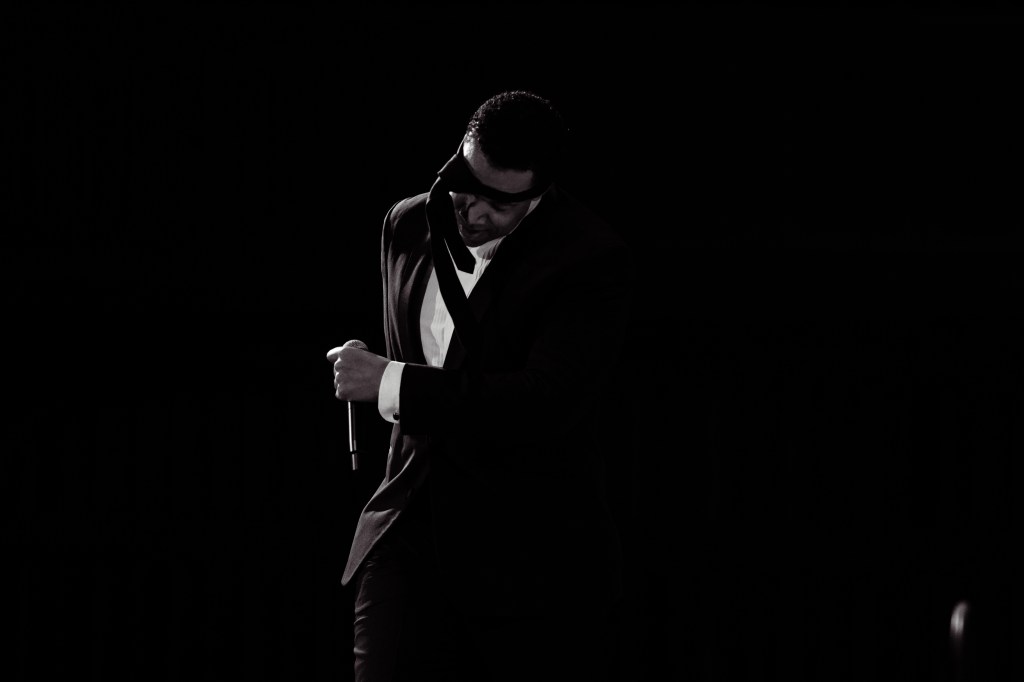
The creative choices and artistic approach prioritize authenticity, emotional resonance, and communal connection. I chose a raw and gritty tone set within the class and history of an antique auditorium at a preeminent university. The antique organ pipes frame the fusion of street culture, fine art, trauma, and redemption. The bare stage and simple black and white attire reveal the seriousness of the themes. It is raw, gritty, real, and unfiltered. The color scheme is minimal and intentional. I chose narrative comedy to keep the focus on the story and the truth. The comedic style is laced with entendres and puns that resemble battle rap and lyricists who tell stories through remarkable poetic devices. At the core of this piece are tools and techniques informed by scientific research and expert practice. The work is layered with youth culture, street culture, and Hip Hop, including street energy, call and response, subtle rhyme, and direct cultural references from “6-7” to drill music. I sought to reclaim and repurpose terms and cultural artifacts often associated with negativity and violence, and use them instead for wellness, peacebuilding, and transformation.
My intention is to empower youth with the tools to achieve wellness and peace despite their circumstances or challenges. My message is that youth are not violent because they are broken or wicked, but because they lack knowledge and health supports due to ineffective and unjust systems. With basic resources and encouragement, they can overcome adversity and reach their potential. I hope every person who views this show develops an abundance of grace and understanding for people who make mistakes. I also hope viewers learn practical tools to heal trauma, manage stress, maintain relationships, and live peaceful lives.
On Sight is relevant, timely, and grounded in modern culture. Gun violence is a leading public health and social issue. Hip Hop is one of the most powerful and popular cultures on the planet, and comedy is an extraordinary therapeutic and educational tool. Today, there are unprecedented political divisions, social stressors, and mental health crises. In this piece, gun violence is an analogy for all the unhealthy ways in which people respond to stress, conflict, and emotional pain, including the harmful ways many people react to those struggling with mental health.


 On Sight